
Michigan Auto Accidents: Understanding Your Legal Rights
Auto accidents in Michigan give rise to two legally distinct claims, each governed by different laws:
These two systems operate differently and provide distinct rights to recourse following an automobile accident in Michigan. Below is a clear, formal overview designed to help injured Michiganders understand their rights under the Michigan No-Fault Act, MCL 500.3101 et seq., and under Michigan’s No-Fault legal framework.
Jonathon Homa represents clients in Michigan auto-injury cases involving disputed PIP benefits, priority challenges, threshold-injury litigation under MCL 500.3135, and insurer denials of wage-loss, replacement services, and medical benefits. He regularly advocates for injured motorists in Kent County Circuit Court and throughout West Michigan in both No-Fault and negligence actions.
I. FIRST-PARTY NO-FAULT CLAIMS (PIP BENEFITS)
Michigan’s No-Fault System: A Complex and Evolving Statutory Scheme
Michigan’s No-Fault Act was created in 1973 and has been amendended several times, with the most recent significant amendments in 2019 and again in 2021, resulting in sweeping changes to coverage levels, medical-fee schedules, attendant-care limitations, and reimbursement rules. These reforms have generated additional litigation to an already heavily-litigated area of law.
Because the statute is both dense and frequently litigated, injured persons should not assume their rights based solely on general summaries. What follows is a simplified overview of the benefits most meaningful to crash victims.
Who Is Entitled to Michigan No-Fault PIP Benefits
PIP benefits are generally available to Michigan residents injured in a motor vehicle accident, subject to statutory priority rules. Out-of-state residents are typically not eligible unless they own and register a vehicle in Michigan.
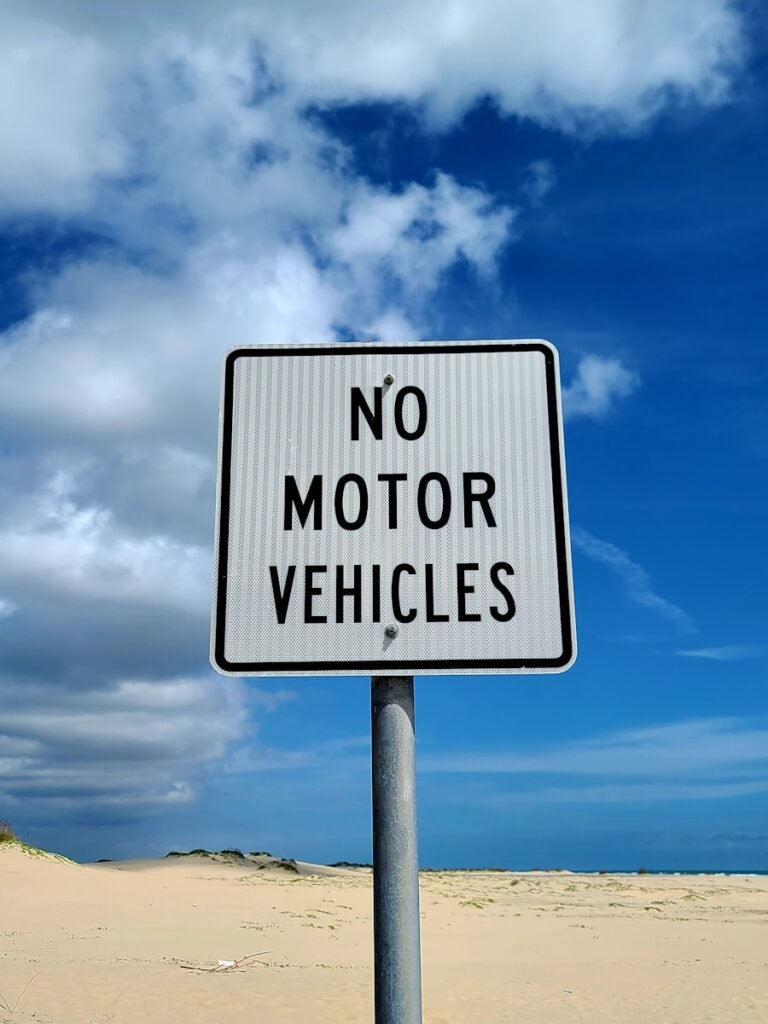
The basic qualifying requirement is involvement in an accident “arising out of the ownership, operation, maintenance, or use of a motor vehicle as a motor vehicle.” See MCL 500.3105(1). “Motor vehicle” is defined as a vehicle, including a trailer, that is operated or designed for operation on a public highway by power other than muscular power and has more than two wheels. Motor vehicle does not include any of the following:
Under MCL 500.3107 and related sections, eligible injured persons may receive:
(i) A motorcycle.
(ii) A moped.
(iii) A farm tractor and other limited implements of husbandry
(iv) An ORV.
(v) A golf cart.
(vi) A power-driven mobility device.
(vii) A commercial quadricycle.
(viii) An electric bicycle.
What No-Fault Benefits Provide
These benefits are not fault-based; entitlement does not depend on who caused the crash.
Priority of Insurance & the Michigan Assigned Claims Plan (MACP)
Michigan’s priority rules determine which insurer must pay, regardless of vehicle ownership. The hierarchy is governed by MCL 500.3114 and MCL 500.3115. In general:
The MACP provides limited PIP benefits, typically capped at $250,000 unless exceptions apply.

The One-Year Notice and One-Year-Back Rules
Michigan imposes strict timelines:
One-Year Notice Rule – MCL 500.3145(1)
A claimant must provide written notice of injury to the insurer within one year of the accident.
One-Year-Back Rule – MCL 500.3145(2)
A lawsuit does not allow recovery of PIP benefits incurred more than one year before filing.
These deadlines are enforced rigorously. Courts consistently apply them as strict limitations on recovery, e.g., Devillers v Auto Club Ins Ass’n, 473 Mich 562 (2005).
Exclusions to No-Fault Benefits
No-fault benefits can be denied when:
II. THIRD-PARTY LIABILITY CLAIMS (TORT CLAIMS)
When a negligent driver causes an accident, an injured person may pursue a third-party claim. Unlike PIP claims, these actions are governed by Michigan’s tort law and require proof of fault.
The Threshold Injury Requirement
To bring a claim against a negligent driver in Michigan for noneconomic damages, a plaintiff must establish a threshold injury has been sustained, which is defined as: (1)death, (2) serious impairment of body function, or (3) permanent serious disfigurement. The definition is set forth in MCL 500.3135(1) & (5) and incorporates language from prior cases intpreting the pre-amendment statute (See, e.g., McCormick v Carrier, 487 Mich 180 (2010) intrpeting the “serious impairment of body function” threshold language).
Without meeting the legal threshold, a plaintiff cannot recover pain and suffering damages from a negligent driver. Therefore, a diligent anaylsis must be conducted regarding the claimant’s injuries to establish the legal threshold requirement r.
Exclusion from Tort Recovery if You Are Uninsured
Under MCL 500.3135(2)(c), a driver or vehicle owner who operates an uninsured vehicle is barred from recovering noneconomic damages — even if the other driver was negligent. This is one of Michigan’s harshest statutory bars.
Proving Negligence: Duty, Breach, Causation, Damages
To succeed in a third-party claim, the injured person must prove:
Damages Available in a Third-Party Claim
1. Noneconomic Damages (Pain and Suffering)
If the threshold is met, injured persons may recover damages for:
2. Excess Economic Damages
Even when PIP pays medical and wage-loss benefits, defendants may still be liable for excess economic damages, including:
See MCL 500.3135(3)(c).

III. WHY LEGAL GUIDANCE MATTERS
No-fault law is highly technical, and liability actions require both medical and legal threshold analysis. Between shifting statutory amendments, fee schedules, threshold litigation, subrogation demands, and insurance-priority disputes, Michigan auto accident claims require careful handling to preserve all rights.
As a Michigan attorney focused on personal injury and civil litigation, Jonathon Homa helps injured persons and families:
If you or a loved one have been injured in an auto accident, whether as a driver, occupant, cyclist, or pedestrian, contact JKH Law, PLC, (616) 226-3762 to discuss your legal rights with attorney Jonathon Homa.
JKH Law, PLC
312 Fulton Street East
Grand Rapids, MI 49503
(616) 226-3762 (office)
(616) 988-6504 (fax)
Personal Injury Practice