
Michigan Construction Accident & Injury Law
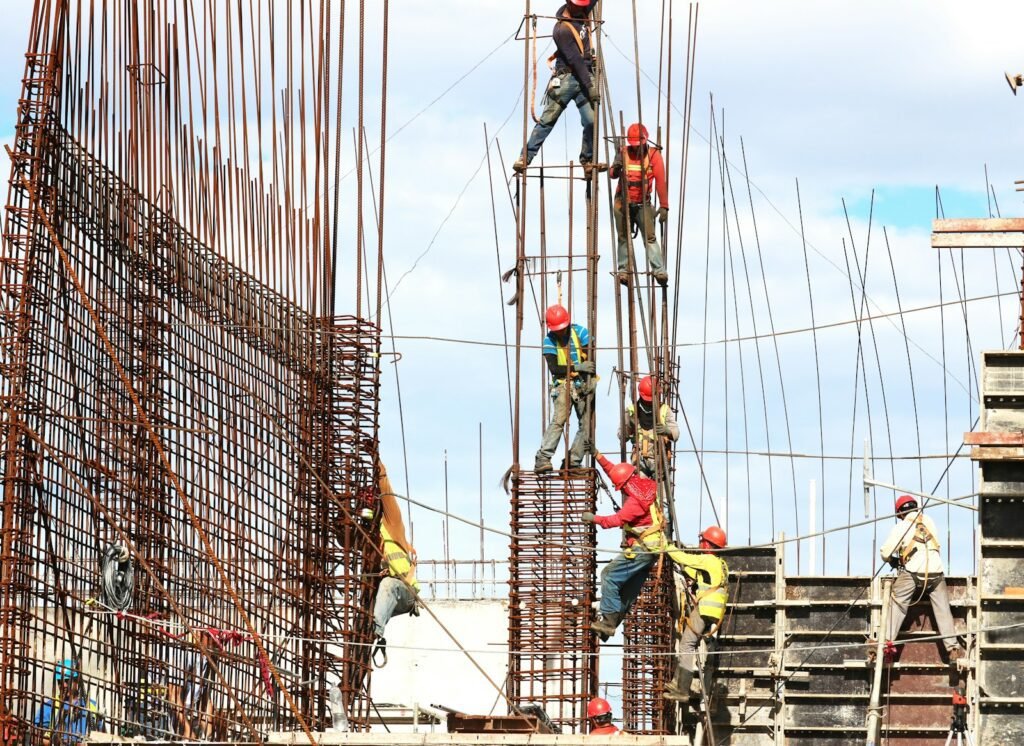
Construction sites are some of the most dangerous workplaces in Michigan. Workers, contractors, and even bystanders can suffer life-altering injuries when safety rules are ignored or equipment is defective. Third-party claims typically involve general-contractor negligence, safety failures, fall injuries, or equipment issues. In addition to third-party claims, workers’ compensation benefits may be also available.
Common Construction Site Accidents
Construction injuries often result from unsafe conditions, inadequate training, or violations of workplace safety standards. Common cases include:
Serious Injuries from Construction Accidents
The injuries sustained on construction sites can be catastrophic, including:
These injuries often require long hospital stays, multiple surgeries, and months of rehabilitation—leaving victims unable to work or support their families.
Applicable Laws
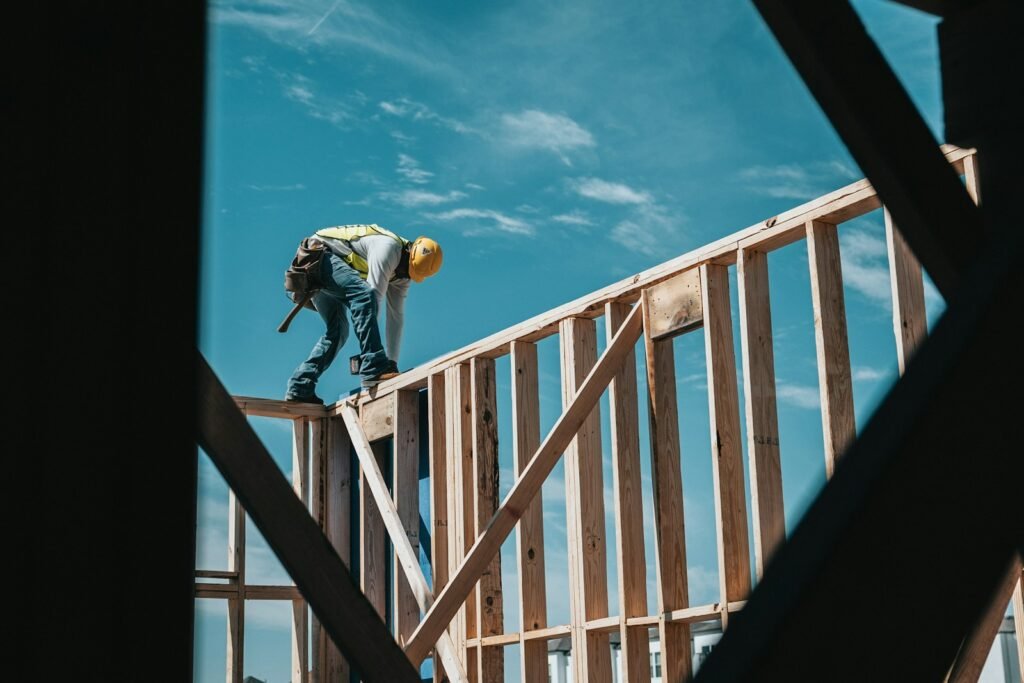
Construction accident claims may involve multiple areas of law, including:
Workers’ Compensation and the Exclusive Remedy Rule
In most cases, an injured construction worker’s claim against their own employer is limited to workers’ compensation benefits. Under MCL 418.131, workers’ compensation is the exclusive remedy for a workplace injury, meaning an employee generally cannot sue their employer in court even if the employer was negligent. The only exception is for an intentional tort — an injury the employer deliberately caused, or one the employer knew was certain to occur and willfully disregarded. The Michigan Supreme Court set this high bar in Travis v. Dreis & Krump Manufacturing Co., 453 Mich. 149 (1996), making clear that even reckless or grossly negligent conduct by an employer usually isn’t enough to get around the exclusive remedy rule. What the rule does not bar is a claim against someone other than your employer — MCL 418.827 specifically preserves your right to also pursue a third-party lawsuit while collecting workers’ compensation benefits, subject to reimbursement of what the employer or its insurer already paid.
Third-Party Liability and the Common Work Area Doctrine
General contractors are not usually liable for the mistakes of the subcontractors they hire — but Michigan law carves out an important exception for injuries in a common work area. Under the four-part test the Michigan Supreme Court set out in Ormsby v. Capital Welding, Inc., 471 Mich. 45 (2004), building on Funk v. General Motors Corp., 392 Mich. 91 (1974), a general contractor can be held liable when it failed to take reasonable steps within its supervisory authority to guard against a readily observable, avoidable danger that created a high risk to a significant number of workers in an area used by multiple trades. The Michigan Supreme Court applied the doctrine again as recently as 2024 in El-Jamaly v. Kirco Manix Construction, LLC, 514 Mich. 263 (2024), confirming it remains a live and heavily litigated theory. A related theory, the retained control doctrine, can extend the same liability to a property owner who kept enough control over the jobsite to effectively step into the general contractor’s shoes — though simply requiring subcontractors to follow general safety rules isn’t enough on its own to trigger it. And under Ghaffari v. Turner Construction Co., 473 Mich. 16 (2005), the fact that a hazard was “open and obvious” does not defeat a common work area claim, unlike many other Michigan premises liability claims.
OSHA and MIOSHA Violations as Evidence
Federal OSHA and Michigan’s own MIOSHA regulations set detailed safety standards for construction sites, and a documented violation can be powerful evidence in a negligence case. Michigan courts have held that these violations are evidence bearing on whether a contractor met the standard of care, not an automatic finding of negligence on their own (Ghaffari v. Turner Construction Co., 259 Mich. App. 608 (2003)). Drawing a clear line between a specific violation and how it caused an injury is often central to building a strong construction accident claim.
Defective Equipment and Product Liability
When a fall protection system, scaffold, crane, or power tool fails because it was defectively designed or manufactured, Michigan’s product liability statute (MCL 600.2945 et seq.) allows an injury claim against the manufacturer or seller — separate from any claim against an employer or contractor. Claims against the parties who designed or built a permanent improvement to real property, as opposed to equipment used on it, are instead governed by Michigan’s six-year statute of repose for construction defects, MCL 600.5839.
When More Than One Party Is at Fault
Construction accidents frequently involve several potentially responsible parties — a general contractor, one or more subcontractors, an equipment manufacturer, a property owner. Michigan’s fault-allocation statute, MCL 600.2957, requires the jury to weigh the fault of every responsible party, including those not named as defendants, and MCL 600.6304 makes each defendant liable only for its own share of the damages rather than the whole verdict. If you share some fault yourself, MCL 600.2959 reduces your damages by your percentage of fault, and bars pain-and-suffering damages entirely if your fault outweighs everyone else’s combined.
Deadlines for Construction Accident Claims
A third-party construction injury lawsuit generally must be filed within three years of the accident under MCL 600.5805(2). Workers’ compensation claims run on a different clock: MCL 418.381 requires written notice to your employer within 90 days of the injury and a formal compensation claim within two years, though late notice is often excused if the employer wasn’t actually prejudiced by the delay. For an occupational illness rather than a single-incident injury, MCL 418.441 gives you two years from when you knew, or reasonably should have known, that the illness was work-related.
Frequently Asked Questions
Can I sue my employer if I’m injured on a Michigan construction site?
Generally not for ordinary negligence. Michigan’s Workers’ Disability Compensation Act, MCL 418.131, makes workers’ compensation benefits your exclusive remedy against your employer, even when the employer was careless. The only exception is a true intentional tort — the employer had actual knowledge an injury was certain to occur and willfully disregarded it.
If I can’t sue my employer, what other legal options do I have?
Often a third-party claim. Under MCL 418.827, an injured worker can still pursue a separate lawsuit against anyone other than the employer whose negligence contributed to the accident — for example, a general contractor, a subcontractor, a property owner, or the manufacturer of defective equipment. A third-party claim isn’t capped the way workers’ comp benefits are, and it can recover damages workers’ comp doesn’t cover, such as pain and suffering.
What if my subcontractor employer didn’t carry workers’ compensation insurance?
Michigan law protects you either way. Under MCL 418.171, a general contractor that hires an uninsured subcontractor becomes the “statutory employer” of that subcontractor’s workers for workers’ compensation purposes — meaning the general contractor’s insurance is responsible for your benefits even if your direct employer had no coverage.
Does an OSHA or MIOSHA violation mean I can automatically sue?
Not by itself. A safety citation from OSHA or Michigan’s own workplace safety agency, MIOSHA, doesn’t create a standalone right to sue. But a documented violation is often powerful evidence in a third-party negligence claim, since it can show the contractor or property owner fell short of a recognized safety standard.
Who can be held liable for a construction site fall or equipment accident?
It depends on the facts, but potential defendants include the general contractor responsible for overall site safety, a subcontractor whose work created the hazard, a property owner who failed to maintain safe conditions, or a manufacturer of defective equipment or protective gear. More than one party can share responsibility for the same accident.
How long do I have to bring a construction accident claim in Michigan?
A third-party personal injury lawsuit generally must be filed within three years of the accident under MCL 600.5805(2). Workers’ compensation claims run on their own, separate deadlines, so it’s important not to wait to have both potential claims reviewed. If the accident was fatal, Michigan’s wrongful death statute, MCL 600.2922, applies instead.
How JKH Law Can Help
At JKH Law, PLC, we help injured individuals pursue complex construction injury cases. We:
If you or a loved one has been seriously injured in a construction site accident, contact attorney Jonathon Homa at JKH Law, PLC, for a free consultation. We are committed to protecting the rights of construction workers and their families throughout Michigan.

JKH Law, PLC
312 Fulton Street East
Grand Rapids, MI 49503
(616) 226-3762 (office)
(616) 988-6504 (fax)
Personal Injury Practice