
Michigan Dog Bite Law: What Actually Counts as a Defense
Michigan is one of a minority of states with a true strict-liability dog-bite statute. If you’ve been bitten and are researching your rights — or you’re a dog owner trying to understand your exposure — the most important thing to understand is how narrow the available defenses actually are.
Michigan’s Strict Liability Standard
Under MCL 287.351, a dog owner is liable for the injuries their dog causes by biting a person, without any need to show the owner knew the dog was dangerous, and regardless of what precautions the owner took. That’s different from many other states, which apply a “one free bite” rule requiring proof the owner knew or should have known the dog had dangerous tendencies before the attack. In Michigan, a dog’s first bite can create full liability. The statute applies when the injured person was lawfully on public property, or lawfully on private property — including the property of the dog’s owner.
The Only Two Defenses
Michigan’s statute recognizes exactly two defenses:
- Provocation: the injured person provoked the dog.
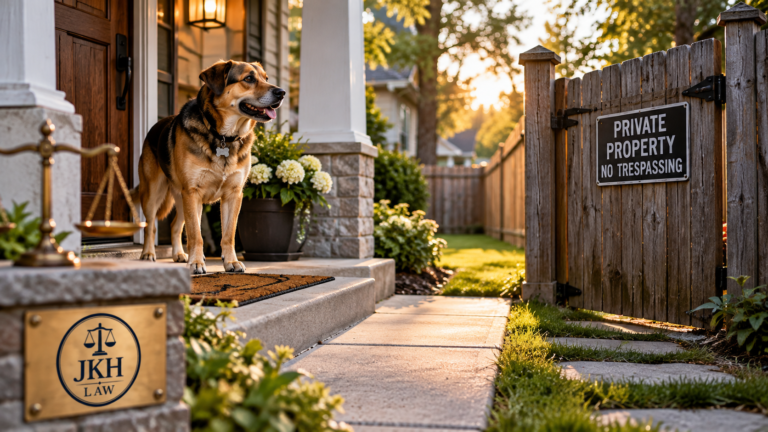
- Unlawful presence: the injured person was not lawfully on the property where the bite occurred — for example, trespassing.
That’s the full list. Michigan courts have described the statute as creating “almost absolute liability” for dog owners, with provocation serving as essentially the only meaningful escape valve.
What Provocation Does — and Doesn’t — Mean
In Koivisto v. Davis, the Michigan Court of Appeals addressed a case where a woman was bitten while trying to break up an attack her own dogs and cats were already suffering from another owner’s dogs. The lower court had found she provoked the attacking dogs by intervening. The Court of Appeals reversed, reasoning that a dog already in an aggressive, attacking state cannot, by definition, become newly “provoked” by a victim’s defensive reaction to that ongoing attack. Provocation, in other words, generally has to be something that caused the dog to become aggressive in the first place — not how a person reacted once an attack was already underway.
Owners and insurers sometimes argue provocation broadly, pointing to almost any interaction with the dog before the bite. Michigan courts have not accepted that broad a reading.
What Doesn’t Reduce a Dog-Bite Claim
Because MCL 287.351 imposes something close to absolute liability, the ordinary comparative-negligence arguments that work in car-accident or premises-liability cases don’t operate the same way here. Michigan courts have held that comparative-fault principles do not apply to reduce damages under the dog-bite statute the way they would in an ordinary negligence claim. A dog owner generally can’t reduce their liability simply by arguing the victim was careless around the dog, unless that conduct actually rises to the level of legal provocation.
JKH Law represents dog-bite victims across Michigan. If you’ve been bitten and aren’t sure whether a defense like provocation or trespass genuinely applies to your situation, contact us to discuss your case.


One Comment
Comments are closed.